Wednesday, October 27, 2021

Hanukah

Overview: Hanukkah History

Hanukkah is one of the few Jewish holidays not mentioned in the Bible. The story of how Hanukkah came to be is contained in the books of 1 and 2 Maccabees, which are not part of the Jewish canon of the Hebrew Bible.


These books tell the story of the Maccabees, a small band of Jewish fighters who liberated the Land of Israel from the Syrian Greeks who occupied it. Under the reign of Antiochus IV Epiphanes, the Syrian Greeks sought to impose their Hellenistic culture, which many Jews found attractive. By 167 BCE, Antiochus intensified his campaign by defiling the Temple in Jerusalem and banning Jewish practice. The Maccabees--led by the five sons of the priest Mattathias, especially Judah--waged a three-year campaign that culminated in the cleaning and rededication of the Temple.


Since they were unable to celebrate the holiday of Sukkot at its proper time in early autumn, the victorious Maccabees decided that Sukkot should be celebrated once they rededicated the Temple, which they did on the 25th of the month of Kislev in the year 164 BCE. Since Sukkot lasts eight days, this became the timeframe adopted for Hanukkah.


About 250 years after these events, the first-century Jewish historian Flavius Josephus wrote his account of the origins of the holiday. Josephus referred to the holiday as the Festival of Lights and not as Hanukkah. Josephus seems to be connecting the newfound liberty that resulted from the events with the image of light, and the holiday is still often referred to by the title Josephus gave it.


By the early rabbinic period about a century later--at the time that the Mishnah (the first compilation of oral rabbinic law included in the Talmud) was redacted--the holiday had become known by the name of Hanukkah (“Dedication”). However, the Mishnah does not give us any details concerning the rules and customs associated with the holiday.


It is in the Gemara (a commentary on the Mishnah) of the Babylonian Talmud that we are given more details and can clearly see the development of both the holiday and the stories associated with it. The discussion of Hanukkah is mentioned in Tractate Shabbat.  Only three lines are devoted to the events of Hanukkah while three pages detail when, where, and how the Hanukkah lights should be lit.


Completed approximately 600 years after the events of the Maccabees, the Talmud contains the extant version of the famous story of the miraculous jar of oil that burned for eight days. The Talmud relates this stories in the context of a discussion about the fact that fasting and grieving are not allowed on Hanukkah. In order to understand why the observance of Hanukkah is so important, the Rabbis recount the story of the miraculous jar of oil.


Perhaps the Amoraim--the sages of the Talmud--were retelling an old oral legend in order to associate the holiday with what they believed to be a blatant, supernatural miracle. Although the seemingly miraculous victory of the Maccabees over the Syrian Greeks was certainly part of the holiday narrative, this event still lies within the natural human realm. The Rabbis may have felt this to be insufficient justification for the holiday’s gaining the legal stature that would prohibit fasting and include the saying of certain festival prayers. Therefore the story of a supernatural event centering on the oil--a miracle--would unquestionably answer any concerns about the legitimacy of celebrating the holiday.


Hanukkah gained new meaning with the rise of Zionism. As the early pioneers in Israel found themselves fighting to defend against attacks, they began to connect with the ancient Jewish fighters who stood their ground in the same place. The holiday of Hanukkah, with its positive portrayal of the Jewish fighter, spoke to the reality of the early Zionists who felt particularly connected to the message of freedom and liberty.


Hanukkah began to find new expression in the years leading up to the founding of the modern state of Israel. In the post-Holocaust world, Jews are acutely aware of the issues raised by Hanukkah: oppression, identity, religious freedom and expression, and the need to fight for national independence. Hanukkah has developed into a holiday rich with historical significance, physical and supernatural miracle narratives, and a dialogue with Jewish history.

Bottom of Form

http://www.myjewishlearning.com/holidays/Hanukkah/TO_Hanukkah_History.htm

Wednesday, August 4, 2021

Comments July 2021


Comments July 2021   Re: Trenton’s Jews – June 2021

Re: Trenton Jewish Historical Society. July 2021

fred edelman 


Mon, Jul 12, 9:42 AM (1 day ago)

Art,


Thank you for sharing the information about Cantor Wisna.


Fred


Art Hoenig


Art, I recently donated to the GTCP. Your project is doing great work. 

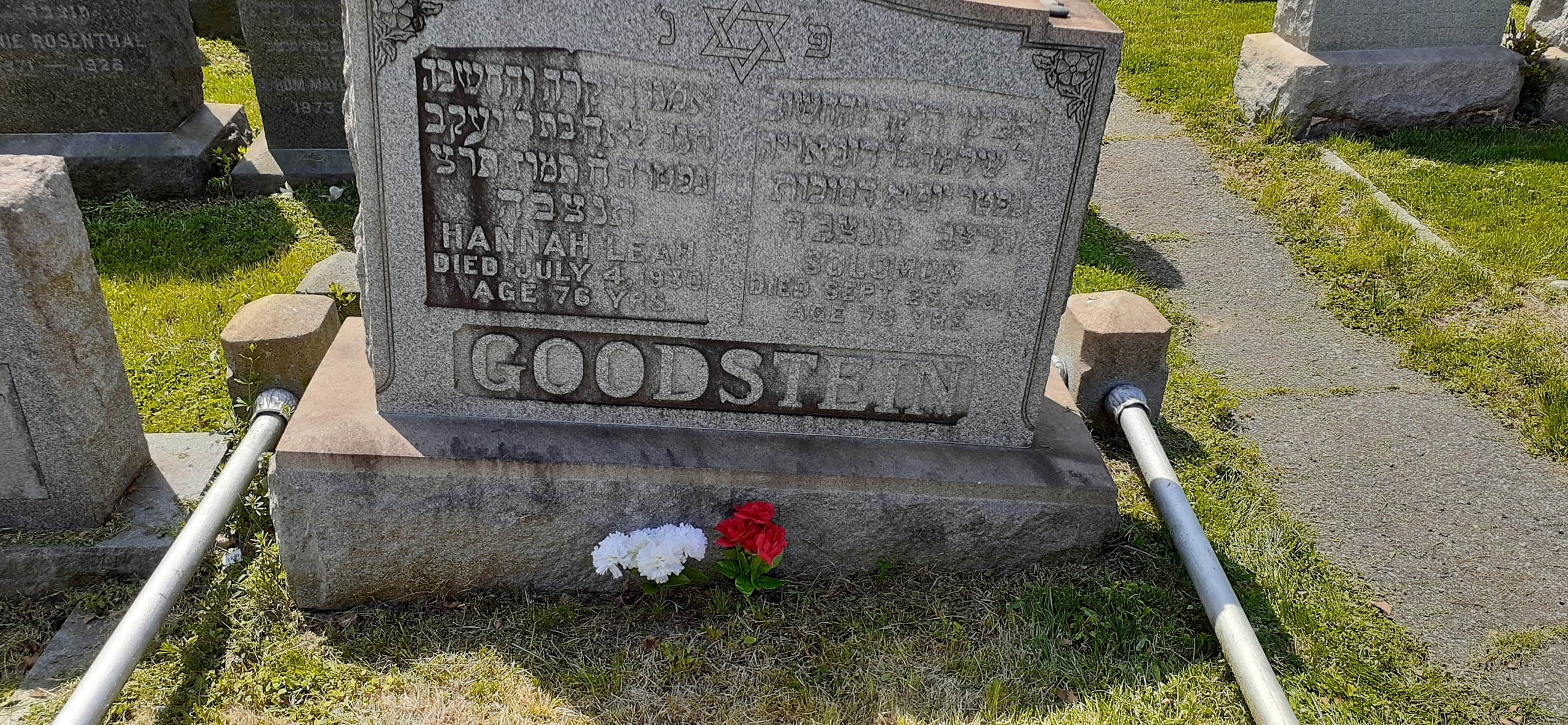
On a visit to my great grandparents grave, Solomon (1853-1931) and Hannah Leah (1854-1930) Goodstein in the People of Truth cemetery on Pitman Ave. I noticed the headstone is sinking badly and there is severe discoloration of the stone.

I have attached photos below for your restoration. 


Friday, June 25, 2021

Witticisms 5 (Berra-isms )


Berra-isms (colloquial expressions that lack logic) are now countless, and many of them are just attributed to Berra, even if he never actually said them. As he so perfectly put it: “I never said most of the things I said.” Here are 50 of our favorites.

1. When you come to a fork in the road, take it.

2. You can observe a lot by just watching.

3. It ain’t over till it’s over.

4. It’s like déjà vu all over again.

5. No one goes there nowadays, it’s too crowded.

6. Baseball is 90% mental and the other half is physical.

7. A nickel ain’t worth a dime anymore.

8. Always go to other people’s funerals, otherwise they won’t come to yours.

9. We made too many wrong mistakes.

10. Congratulations. I knew the record would stand until it was broken.

11. You better cut the pizza in four pieces because I’m not hungry enough to eat six.

12. You wouldn’t have won if we’d beaten you.

13. I usually take a two-hour nap from one to four.

14. Never answer an anonymous letter.

15. Slump? I ain’t in no slump… I just ain’t hitting.

16. How can you think and hit at the same time?

17. The future ain’t what it used to be.

18. I tell the kids, somebody’s gotta win, somebody’s gotta lose. Just don’t fight about it. Just try to get better.

19. It gets late early out here.

20. If the people don’t want to come out to the ballpark, nobody’s going to stop them.

21. We have deep depth.

22. Pair up in threes.

23. Why buy good luggage, you only use it when you travel.

24. You’ve got to be very careful if you don’t know where you are going, because you might not get there.

25. All pitchers are liars or crybabies.